
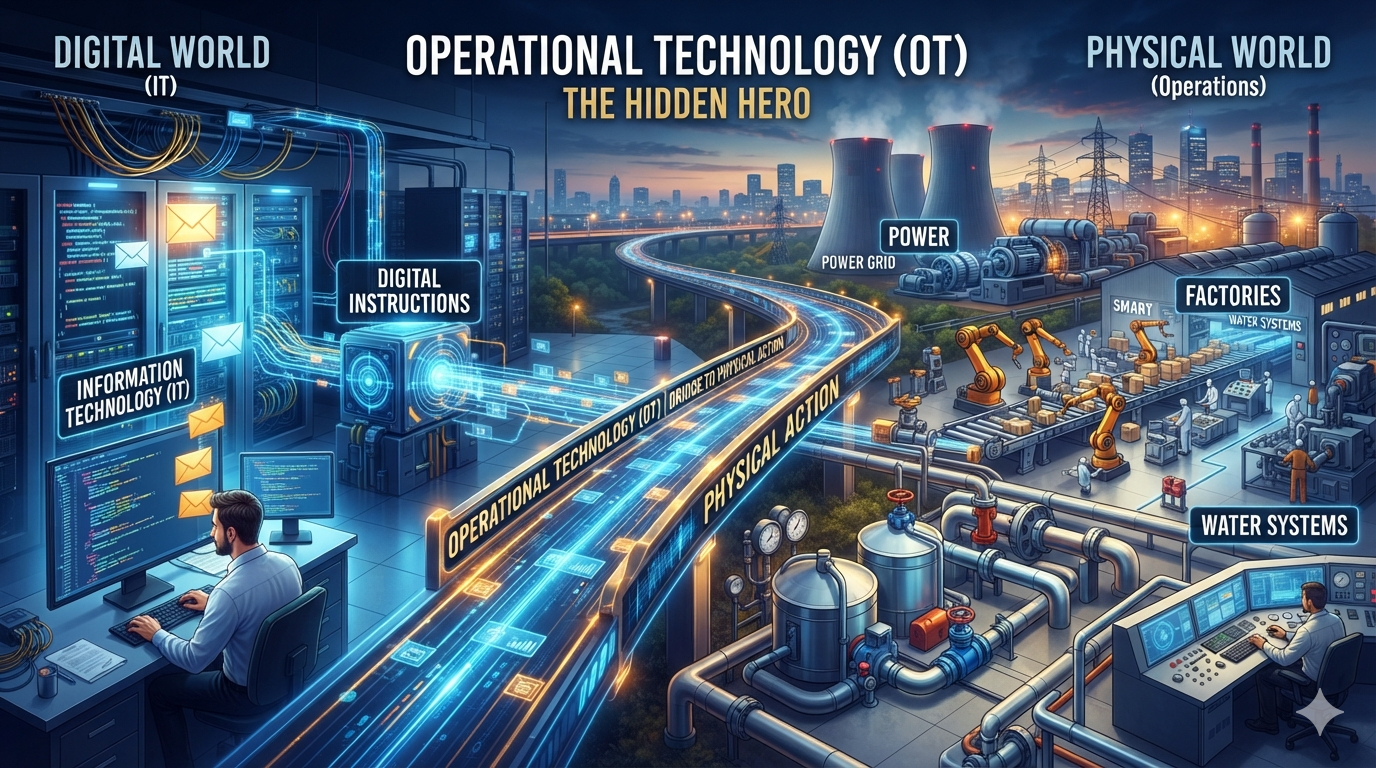
Do you ever wonder how big factories, power plants, and water systems keep running so smoothly? The secret is something called ops technology. Many people hear the term “IT” (Information Technology) all the time, but ops technology—often called Operational Technology or OT—is the hidden hero that actually moves the physical world. While IT deals with your emails and files, ops technology is the brains behind the machines that make our lives work. It is the bridge between digital instructions and physical action, ensuring everything from your lights to your morning coffee reaches you without a hitch.
What Exactly Is Ops Technology?
At its simplest, ops technology refers to the hardware and software used to monitor and control physical devices. Think of sensors on a factory floor or controllers that manage electricity on a power grid. Unlike your laptop, which is made for browsing and writing, ops technology is built for one main goal: physical control. It tells a robotic arm to pick up a part or a valve to shut off water if there is a leak. It is rugged, reliable, and designed to run for years without needing a break or a reboot.
How Does Ops Technology Work?
Ops technology works by creating a constant loop of information. It uses sensors to “feel” what is happening with a machine in real-time. This information travels to a controller, which is like a small, tough computer. The controller checks the data against set rules and then sends a command back to the machine to perform an action. For example, if a machine gets too hot, the ops technology detects the rise in temperature. It then triggers a fan or slows down the engine automatically to prevent any damage, keeping the entire process safe and steady.
The Big Difference: IT vs. OT
It is very common to confuse IT and OT, but they have different jobs. Information Technology (IT) focuses on data, like your company’s records, spreadsheets, and emails. Ops technology (OT) focuses on the “real stuff”—the machines, pipes, and motors. If IT is the brain that stores the plans, ops technology is the muscle that carries them out. In the past, these two worlds were kept completely separate. Today, they are starting to work together to share data, which helps businesses become much smarter, faster, and more efficient than ever before.
Why Is Ops Technology So Important Today?
Without ops technology, the modern world would basically come to a standstill. We rely on it to keep our critical infrastructure running. It manages our water treatment plants, controls our traffic lights, and runs the assembly lines that build our cars and toys. Ops technology provides the stability we need for daily life. Because it is so critical, experts work very hard to keep these systems secure. They ensure that these physical processes remain protected from digital threats so that the lights stay on and the water keeps flowing for everyone.
Key Benefits of Using Ops Technology
Using ops technology offers many perks for businesses and industries. First, it increases efficiency because machines can work faster and more accurately than people. Second, it improves safety. By having sensors watch for danger, ops technology can stop machines before an accident happens. Third, it saves money. Because these systems can predict when a part might break, companies can fix it before it stops the whole factory. This “predictive maintenance” is a game-changer. It means less downtime, fewer repairs, and a much smoother operation for everyone involved in the process.
Essential Components of Industrial Systems
You might be curious about what these systems look like up close. Ops technology usually involves a few main parts. You have sensors that gather information, actuators that move parts, and controllers like PLCs (Programmable Logic Controllers) that act as the local brain. Another big player is SCADA (Supervisory Control and Data Acquisition), which is a system that allows operators to see the entire factory from a single computer screen. Together, these tools make up the backbone of modern industrial control, allowing one person to manage a massive plant with just a few clicks.
The Rise of Smart Automation
Automation is the heart of ops technology. By using smart software, businesses can automate boring or dangerous tasks. For example, in a bottling plant, ops technology can count, fill, and cap thousands of bottles every minute without a single human mistake. This level of precision is only possible because the system is connected to smart sensors that provide constant feedback. As technology improves, these systems are becoming even “smarter,” learning how to optimize themselves to save energy and reduce waste, which is great for both the business and our planet.
Protecting Our Industrial Future
Because ops technology is now connected to the internet to share data, security has become a huge topic. Keeping ops technology safe is different from protecting your home computer. You cannot just install an antivirus program on a water pump! Instead, experts use special strategies to isolate these critical systems. They build “digital fences” that allow the necessary information to flow out while keeping bad actors out. This keeps the physical machines safe from cyber-attacks, ensuring that our essential services remain reliable and secure against any outside interference.
How Businesses Adopt These Systems
Many companies start small when they decide to add ops technology to their workflow. They might put sensors on one machine to see how it performs. Once they see the value, they expand the system to the whole factory. It is a journey of turning “dumb” machines into “connected” ones. The process requires good planning and a team that understands both the mechanics of the machine and the software controlling it. When done right, this upgrade helps a small business grow into a competitive powerhouse by making the best use of every resource.
Future Trends in Industrial Operations
The future of ops technology looks very bright and exciting. We are seeing more use of Artificial Intelligence (AI) to help these systems make decisions on their own. Imagine a factory that can “feel” a change in the weather or a shift in demand and adjust its speed to save energy! Also, we are moving toward more mobile, cloud-based systems where managers can monitor their ops technology from a tablet while walking through the facility. These changes will continue to make our industries safer, faster, and more sustainable for future generations to enjoy.
Frequently Asked Questions (FAQs)
1. What is the full form of OT? OT stands for Operational Technology. It is the set of hardware and software used to monitor and control physical devices in industries.
2. Is ops technology the same as IT? No. IT focuses on data and information (like email), while ops technology focuses on physical machinery and processes (like factory robots).
3. Why do we need ops technology? We need it to keep critical systems like power grids, water supplies, and manufacturing plants safe, efficient, and reliable every single day.
4. Can ops technology be hacked? Yes, if it is connected to a network. That is why experts use strict security measures to protect these systems from cyber threats.
5. What is an example of an OT device? A common example is a PLC (Programmable Logic Controller), which is a small, rugged computer used to control factory equipment like assembly lines.
6. Does every factory use ops technology? Most modern factories use some form of ops technology to automate tasks, improve safety, and ensure they are producing high-quality goods consistently.
Conclusion
Ops technology is truly the engine of our modern world. From the energy that powers your home to the goods you buy, it works quietly in the background to ensure everything stays on track. By bridging the gap between digital data and physical action, it makes our lives safer and more comfortable. We hope this guide helped you understand how important this technology is! Do you think your local community uses these systems in interesting ways? Share your thoughts with us in the comments!