Have you ever paused while writing because you couldn’t remember whether it was desert or dessert? You’re not alone. The confusion between these two words is incredibly common because they look almost identical but mean completely different things.
Understanding desert vs dessert is important for clear writing and confident communication. One word refers to a dry, sandy landscape, while the other is the sweet treat people look forward to after dinner. A single extra “s” changes the meaning entirely.
In this guide, you’ll learn the meanings, spelling differences, pronunciation tips, memory tricks, examples, and even a few jokes to make the distinction unforgettable.
Desert vs Dessert Meaning
The easiest way to understand these words is by looking at what they actually mean.
What Does “Desert” Mean?
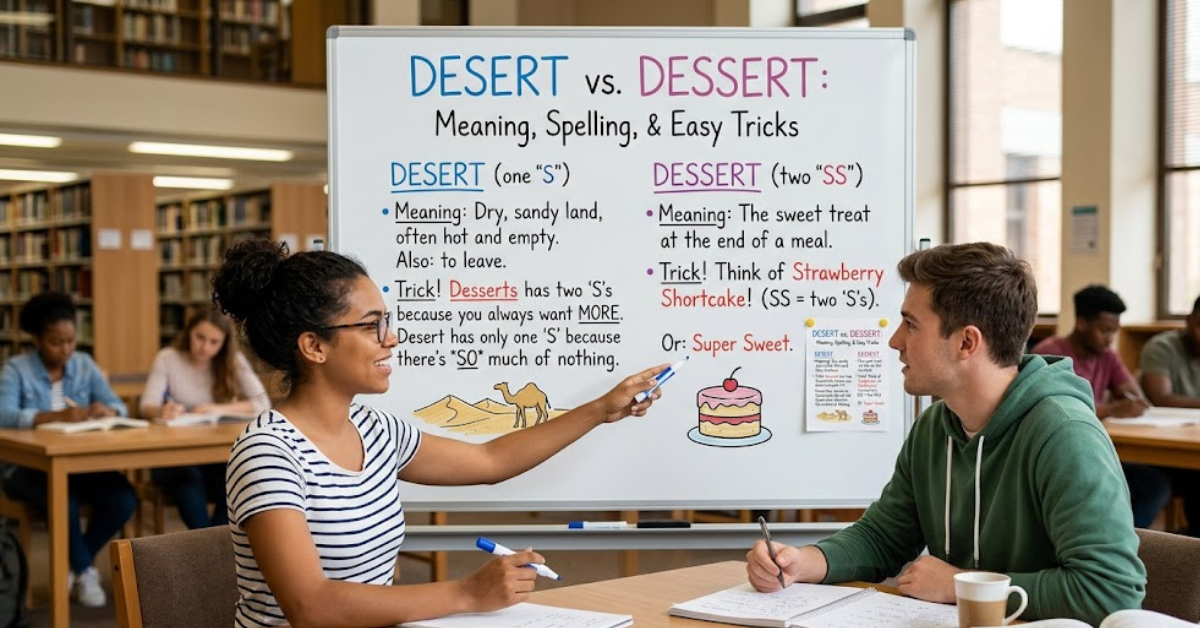
The word desert usually refers to a dry area of land that receives very little rainfall. Think of places with sand dunes, cacti, and extremely hot temperatures.
Examples:
- The Sahara is the largest hot desert in the world.
- Camels can survive for days in the desert.
- They crossed the desert during the expedition.
However, desert can also function as a verb meaning “to abandon.”
Example:
- The soldiers did not desert their team.
This second meaning is less common in everyday conversation but still important in English grammar.
What Does “Dessert” Mean?
Dessert is a sweet dish served after the main meal.
Examples include:
- Ice cream
- Cake
- Brownies
- Pudding
- Cheesecake
Example sentence:
- My favorite dessert is chocolate cake.
So, when comparing desert vs dessert definition, the difference is simple:
- Desert = dry land or abandonment
- Dessert = sweet food after a meal
Desert vs Dessert Difference
The biggest difference is both spelling and meaning.
Quick Comparison
- Desert has one “s”
- Dessert has two “s” letters
Another important distinction is pronunciation, which changes depending on usage.
Desert vs Dessert Pronunciation
Many learners struggle with desert vs dessert pronunciation because the words sound similar.
How to Pronounce “Desert”
When referring to dry land:
- Pronounced: DEZ-ert
When used as a verb meaning abandon:
- Pronounced: dih-ZERT
How to Pronounce “Dessert”
- Pronounced: dih-ZERT
Interestingly, the pronunciation of dessert sounds almost identical to the verb form of desert.
Desert vs Dessert Pronunciation UK
In British English, the pronunciation remains very similar:
- Desert (noun): DEZ-uht
- Dessert: dih-ZURT
The stress placement helps distinguish them.
How to Remember Desert vs Dessert
If you constantly mix them up, don’t worry. There are several easy memory tricks.
The “Extra S” Trick
A classic desert vs dessert trick is this:
- You always want more dessert.
- That’s why dessert gets an extra “s.”
This is probably the most popular way people remember the spelling.
Think of Strawberry Shortcake
Desserts are sweet, and strawberries start with “ss” sounds. The double “s” in dessert can remind you of sweets.
Desert Is Dry
A desert is dry and empty, so it only gets one “s.”
This simple visual association works well for kids and adults alike.
Desert vs Dessert Spelling Explained
The confusion mostly happens because the words differ by just one letter.
Correct Spellings
- Desert = one “s”
- Dessert = two “s”
If you’re asking, “How do you spell desert vs dessert?” remember this:
- The sweet one always has extra sugar and an extra “s.”
Common Examples in Sentences
Learning through examples makes the difference easier to remember.
Desert Examples
- The travelers carried water through the desert.
- Arizona has beautiful desert landscapes.
- Nobody wanted to desert the project halfway through.
Dessert Examples
- We ordered cheesecake for dessert.
- Apple pie is a traditional dessert.
- She skipped dinner and went straight to dessert.
Desert vs Dessert English Usage
In English, both words are commonly used but in very different contexts.
Desert in Geography
You’ll often see desert in:
- Geography books
- Travel articles
- Climate discussions
- Nature documentaries
Dessert in Food Conversations
You’ll see dessert in:
- Restaurant menus
- Recipes
- Food blogs
- Family dinners
Understanding context helps prevent spelling mistakes.
Desert vs Dessert Meme and Popular Jokes
The internet loves grammar jokes, and this pair is a favorite topic for memes.
Popular Memory Joke
“You want two desserts, not two deserts.”
This joke works because most people would gladly take extra cake but not extra sand.
Another Funny Reminder
“Stressed spelled backward is desserts.”
People love sharing this joke online because it combines humor with a spelling reminder.
The popularity of the desert vs dessert meme trend shows just how often people confuse these words.
Desert vs Dessert Worksheet Ideas
Teachers often use worksheets to help students practice the difference.
A good desert vs dessert worksheet may include:
- Fill-in-the-blank exercises
- Sentence correction tasks
- Pronunciation practice
- Matching definitions
- Vocabulary games
Example exercise:
Choose the correct word:
- We ate ice cream for _______.
- The hikers walked across the _______.
Answers:
- dessert
- desert
Why People Confuse Desert and Dessert
There are several reasons these words are commonly mixed up.
Similar Spelling
Only one letter separates them.
Similar Pronunciation
Especially with the verb form of desert, the pronunciation becomes almost identical to dessert.
Fast Typing
Autocorrect mistakes and quick typing often create errors.
English Can Be Tricky
English contains many confusing word pairs like:
- Their vs there
- Affect vs effect
- Accept vs except
This pair is simply another example of English spelling challenges.
Easy Ways to Master the Difference
Here are some practical ways to stop confusing them forever.
Read More Frequently
Seeing the words used correctly in books and articles strengthens memory.
Practice Writing Sentences
Create your own examples using both words.
Use Flashcards
One side can show the word, and the other can show its meaning.
Say the Words Out Loud
Pronunciation practice helps connect spelling with meaning.
Desert vs Dessert for Students and Writers
Correct spelling matters in:
- School assignments
- Emails
- Social media posts
- Professional writing
- Exams
A simple spelling error can completely change the meaning of a sentence.
For example:
- “I love chocolate desert” creates a funny image of a cocoa-covered wasteland.
FAQs About Desert vs Dessert
What is the difference between desert and dessert?
Desert refers to dry land or abandoning someone, while dessert means a sweet dish eaten after a meal.
How do you remember the desert vs dessert?
The easiest trick is remembering that dessert has two “s” letters because people usually want a second serving of dessert.
Is dessert spelled with one or two s letters?
Dessert is spelled with two “s” letters.
Why are desert and dessert confusing?
They look almost identical and can sound similar when spoken aloud.
What is the pronunciation of desert and dessert?
Desert (dry land) is pronounced “DEZ-ert,” while dessert is pronounced “dih-ZERT.”
Can desert be used as a verb?
Yes. Desert can mean “to abandon.”
Example:
- The captain refused to desert the crew.
What is a simple desert vs dessert joke?
“You’d rather have two desserts than two deserts.”
Conclusion
Understanding desert vs dessert becomes much easier once you focus on the meanings, spelling patterns, and pronunciation differences. A desert is a dry place with one “s,” while dessert is the sweet treat with two “s” letters.
The best memory trick is simple: everyone wants extra dessert, so it gets an extra “s.” Once you connect that idea to the spelling, the confusion usually disappears for good.
Whether you’re writing an essay, sending a text, or helping a child learn English, mastering this small difference can make your communication clearer and more confident.