
You’re scrolling through a conversation on TikTok, Snapchat, Instagram, or a text message when someone suddenly replies with “SMD.” If you’re confused or wondering what does SMD stand for in text, you’re not alone.
Internet slang changes quickly, and abbreviations often have different meanings depending on the situation. In most texting and social media conversations, SMD is a slang phrase that can be offensive or confrontational. However, it can also represent completely different terms in professional, technical, and online communities.
In this guide, you’ll discover the most common meanings of SMD, how people use it in messages, examples of its usage, and whether you should use it yourself.
The Most Common Meaning of SMD in Texting
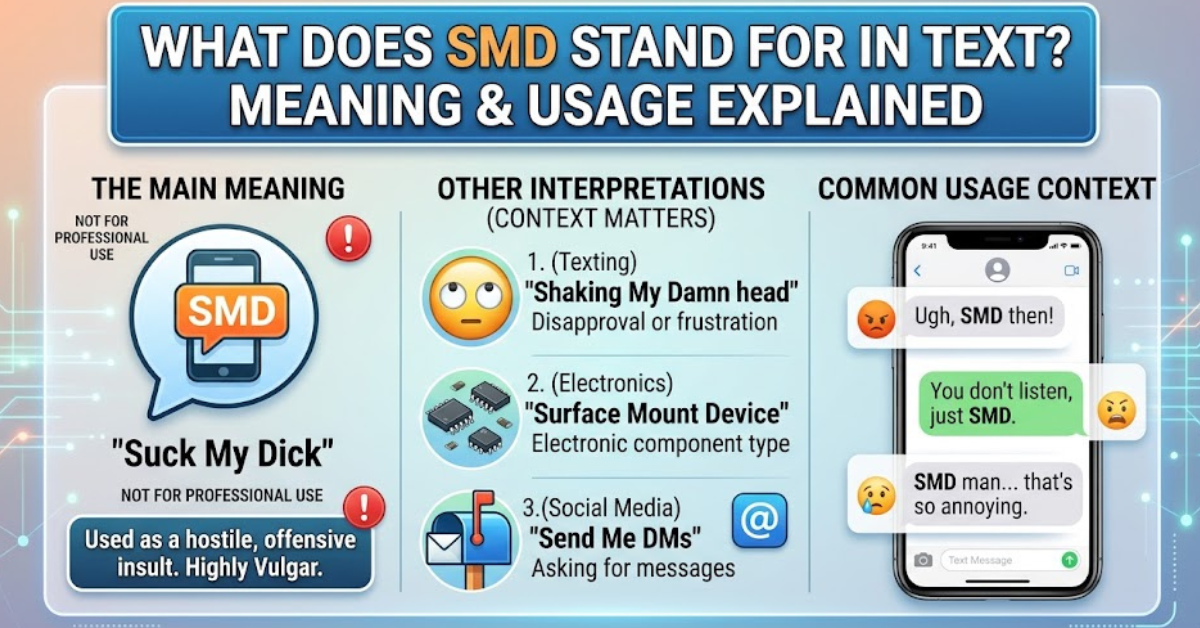
In casual online conversations, SMD most commonly stands for “suck my dick.” It is a vulgar expression generally used as an insult, a way to show anger, disrespect, or to dismiss someone during an argument.
It often appears on platforms such as:
- Snapchat
- TikTok
- X (formerly Twitter)
- Discord
- Text messages
Examples of SMD in a Conversation
Example 1:
Person A: “You’re always complaining about everything.”
Person B: “SMD.”
Example 2:
Person A: “You really thought you could beat me?”
Person B: “Stay mad. SMD.”
In these examples, the abbreviation is used aggressively and can be considered rude or inappropriate.
Is SMD Always Offensive?
No. Although the vulgar meaning is the most popular in modern internet slang, SMD can have other interpretations depending on the context, audience, and platform.
For example, in certain communities, SMD may stand for:
- Surface-Mount Device — an electronic component mounted directly onto a circuit board.
- Social Media Detox — a phrase used by some people discussing breaks from online platforms.
- Smart Device Management — a term used in technology and IT environments.
- Single-Minute Exchange of Dies (SMED) — a manufacturing concept sometimes confused with SMD.
The surrounding conversation usually makes the intended meaning clear.
Why Do People Use SMD in Online Slang?
Internet users often shorten phrases to save time, create inside jokes, or communicate in a way that feels familiar within online culture.
People use SMD to:
- Express frustration or anger
- Respond sarcastically during an argument
- Show confidence or dominance in competitive conversations
- Follow trends or slang popularized by memes and social media
However, because it carries a strong offensive meaning in many cases, it can easily start conflicts.
Should You Use SMD in a Text?
Before using SMD, consider the person you are talking to and the context of the conversation.
Situations Where It May Be Inappropriate
Avoid using SMD in:
- Professional emails or workplace chats
- Conversations with teachers or authority figures
- Formal social media accounts
- Discussions where you want to maintain respect
When It Appears in Casual Online Spaces
Among close friends, some people may use it jokingly or as playful trash talk. Still, humor varies from person to person, and what one friend finds funny may offend another.
When you are unsure, it is safer to choose a less offensive expression.
SMD Meaning on Different Social Media Platforms
SMD on Snapchat
On Snapchat, SMD almost always refers to the vulgar slang meaning. It may appear in private chats, stories, or reactions between users.
SMD on TikTok
TikTok users often use SMD in comment sections, trends, or jokes. The meaning depends on the tone of the content but is usually meant as a rude comeback or expression of attitude.
SMD on Instagram and X
On Instagram and X, SMD frequently appears in arguments, memes, and humorous posts. It is commonly used as a dismissive phrase toward another person.
Other Popular Text Slang Similar to SMD
If you spend time online, you may also see other abbreviations such as:
- LOL — Laugh Out Loud
- OMG — Oh My God
- IDK — I Don’t Know
- TBH — To Be Honest
- SMH — Shaking My Head
- IMO — In My Opinion
- FR — For Real
- NGL — Not Gonna Lie
Learning these terms can make digital conversations easier to understand.
Key Takeaways
- SMD is an abbreviation with multiple meanings.
- In texting and social media, it usually means a vulgar phrase used as an insult.
- Context determines whether SMD has a slang, technical, or professional meaning.
- The term is common on platforms like TikTok, Snapchat, Instagram, and Discord.
- It is best avoided in formal or professional communication.
FAQs About SMD in Text
What does SMD stand for in text messages?
In most text messages, SMD stands for a vulgar phrase used to insult, dismiss, or challenge another person. The meaning can vary depending on the conversation.
What does SMD mean on Snapchat?
On Snapchat, SMD usually carries the same slang meaning seen across social media and is often used jokingly or during arguments.
Is SMD a bad word?
Yes, SMD is generally considered offensive because it represents an explicit phrase. It may be acceptable among certain friends, but it is inappropriate in many situations.
Can SMD have a non-offensive meaning?
Yes. In technical fields, SMD can mean terms such as Surface-Mount Device or Smart Device Management. The context tells you which definition applies.
What does someone mean when they reply with SMD?
A person replying with SMD is often expressing anger, disrespect, sarcasm, or dismissal, though the exact intention depends on their relationship with the recipient and the tone of the conversation.
Is SMD popular among younger people?
Yes. SMD is commonly found among younger internet users, especially on social media platforms where slang, memes, and shortened phrases spread quickly.
Conclusion
Understanding what does SMD stand for in text helps you navigate modern online conversations with more confidence. While the abbreviation most often refers to a vulgar expression used in arguments or jokes, it can also represent technical and professional terms in other contexts.
The key to interpreting SMD correctly is paying attention to the platform, the conversation, and the relationship between the people involved. As internet slang continues to evolve, staying informed about common abbreviations can help you communicate more effectively and avoid misunderstandings.