When driving on busy roads, one question often comes up: based on the speed limit, how much of a gap should you leave when passing the bicycle rider? It sounds simple, but the answer depends on safety laws, road conditions, and something many drivers overlook—speed itself.
Cyclists are among the most vulnerable road users, and even a small misjudgment while overtaking can lead to serious accidents. That’s why understanding the correct passing distance isn’t just about following rules—it’s about protecting lives.
What Is the Safe Passing Distance for Cyclists?
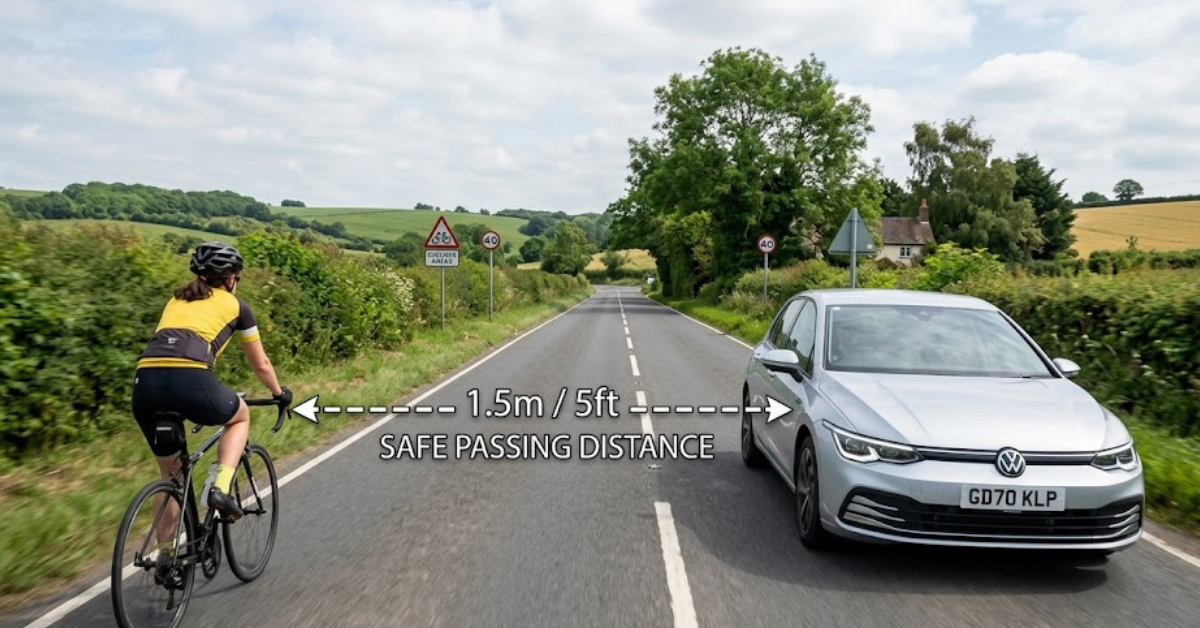
In most road safety guidelines, the minimum safe passing distance is:
- At least 1.5 meters (about 5 feet) in many countries
- 3 feet (about 1 meter) in some regions like certain U.S. states
However, when we talk about based on the speed limit, how much of a gap should you leave when passing the bicycle rider, the answer changes slightly: higher speed means a larger safety buffer.
Why speed matters
The faster you are driving:
- The stronger your wind turbulence becomes
- The less time you have to react
- The more forceful the impact risk becomes if something goes wrong
So, at higher speed limits (like 80–100 km/h roads), it’s safer to increase the gap beyond the legal minimum.
How Speed Limits Affect Passing Distance
Low-speed roads (30–50 km/h)
On residential or city roads:
- Maintain at least 1–1.5 meters
- Reduce speed significantly before overtaking
- Watch for door openings, parked cars, and pedestrians
Medium-speed roads (60–80 km/h)
On suburban or mixed traffic roads:
- Keep 1.5–2 meters minimum
- Move fully into the next lane if possible
- Be extra cautious near intersections
High-speed roads (90 km/h and above)
On highways or fast rural roads:
- Maintain 2 meters or more when safely possible
- Do not rush overtakes
- Consider lane changes instead of close passing
So, based on the speed limit, how much of a gap should you leave when passing the bicycle rider? The rule of thumb is simple: the higher the speed, the larger the gap you should give.
Key Factors That Influence Safe Passing Distance
Even beyond speed limits, several real-world factors affect how much space you should leave:
1. Wind Turbulence from Vehicles
Large vehicles like trucks or SUVs create air pressure that can push cyclists off balance.
2. Road Width
Narrow lanes may require you to slow down and wait instead of overtaking.
3. Weather Conditions
Wind, rain, or slippery roads increase risk and require extra distance.
4. Cyclist Skill Level
Children or inexperienced riders may wobble unexpectedly.
5. Traffic Density
Heavy traffic often means safer to wait rather than squeeze past.
Safe Overtaking Tips for Drivers
If you’re unsure about how much space to leave, follow these practical rules:
- Slow down before overtaking
- Check mirrors and blind spots carefully
- Move fully into the adjacent lane if available
- Pass only when there’s clear visibility ahead
- Never honk aggressively near cyclists
A good habit is to treat cyclists like moving vehicles, not obstacles.
Common Mistakes Drivers Make
- Passing too closely at high speeds
- Cutting back into the lane too quickly
- Underestimating wind pressure from fast-moving cars
- Overtaking on narrow roads without visibility
These mistakes often happen when drivers ignore how speed impacts safe distance.
Read also <<< Colonoscopy Diet
FAQs
1. Based on the speed limits, how much of a gap should you leave when passing a bicycle riders?
At minimum, 1.5 meters is recommended, but at higher speeds you should increase it to 2 meters or more for safety.
2. Is there a legal minimum passing distance everywhere?
No. It varies by country and region, but many places require between 1–1.5 meters minimum.
3. Why do cyclists need more space at higher speeds?
Because faster vehicles create stronger wind pressure and reduce driver reaction time.
4. Can I overtake a cyclist on a narrow road?
Only if it’s completely safe and you can maintain proper distance. Otherwise, wait.
5. What is the safest way to pass a cyclist?
Slow down, check for oncoming traffic, move into the next lane if possible, and give at least 1.5–2 meters of space.
Conclusion
Understanding based on the speed limit, how much of a gap should you leave when passing the bicycle rider is essential for safe driving. While legal minimums provide a baseline, real-world safety depends heavily on speed, road conditions, and driver awareness.
The safest approach is simple: slow down, give extra space, and treat cyclists with patience and respect.
If you want safer driving habits, start by practicing wider passing distances today—it could make all the difference on the road.