
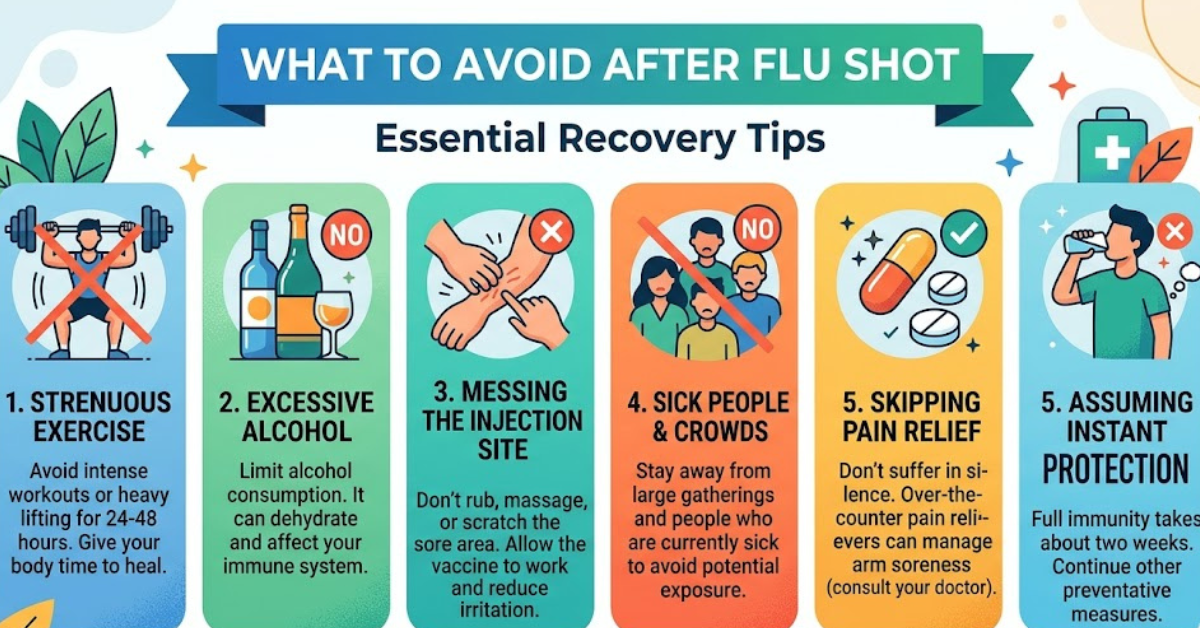
Getting a flu vaccine is one of the simplest and most effective ways to protect yourself during flu season. But many people still wonder about what to avoid after flu shot to ensure a smooth recovery and reduce side effects.
While the flu shot is generally safe, your body does need a short period to adjust and build immunity. What you do in the hours and days afterward can influence how you feel. Let’s break down the key things you should avoid and why they matter.
Understanding the Flu Shot and Your Body’s Response
Before diving into what to avoid after flu shot, it helps to understand what’s happening inside your body.
The flu vaccine works by training your immune system to recognize influenza viruses. This can trigger mild reactions, such as:
- Soreness at the injection site
- Mild fever or fatigue
- Headache or muscle aches
- Slight chills
These are normal signs that your immune system is responding. However, certain habits can make these side effects feel worse or slow down recovery.
What to Avoid After Flu Shot for a Smooth Recovery
1. Avoid Intense Exercise Immediately After Vaccination
One of the most important things to avoid after flu shot is heavy physical activity.
Strenuous workouts like weightlifting, running, or high-intensity training can:
- Increase fatigue
- Worsen muscle soreness
- Add unnecessary stress to your immune system
What to do instead:
Stick to light movement such as walking or gentle stretching for 24 hours.
2. Avoid Alcohol Consumption
Alcohol can interfere with your immune system’s response.
After a flu shot, drinking alcohol may:
- Dehydrate your body
- Increase dizziness or fatigue
- Reduce immune efficiency temporarily
Better choice:
Stay hydrated with water, herbal teas, or electrolyte drinks for at least a day.
3. Avoid Touching or Rubbing the Injection Site
It’s normal for your arm to feel sore after the shot, but constantly touching or massaging it can make things worse.
Avoid:
- Rubbing the area aggressively
- Applying unapproved creams immediately
- Putting pressure on the arm
Instead:
Use a cool compress if needed to reduce swelling or discomfort.
4. Avoid Skipping Rest
Many people underestimate the importance of rest after vaccination.
Your body needs energy to build immunity, so avoiding rest can:
- Prolong fatigue
- Increase flu-like symptoms
- Slow immune response
Tip:
Get a full night’s sleep and avoid over-scheduling your day.
5. Avoid Ignoring Hydration
Dehydration can worsen common post-flu-shot symptoms like headaches and tiredness.
Avoid:
- Too much caffeine
- Sugary sodas as your main fluids
- Not drinking enough water throughout the day
Aim for:
At least 6–8 glasses of water daily after vaccination.
6. Avoid Taking Unnecessary Painkillers Too Soon
While mild pain relief can help, don’t take medication unnecessarily right after the shot.
Why?
- Some painkillers may slightly reduce immune response if overused
- You may not need them if symptoms are mild
Use only if needed:
Paracetamol or ibuprofen can be taken if soreness or fever becomes uncomfortable (follow medical advice).
7. Avoid Exposure to Sick Individuals (If Possible)
Your immunity is not weakened, but it is actively working after vaccination.
To be safe:
- Avoid close contact with sick people for 24–48 hours
- Maintain good hygiene
- Wash hands regularly
Common Side Effects After Flu Shot
Understanding side effects helps you avoid unnecessary worry. These may include:
- Mild arm pain or redness
- Low-grade fever
- Tiredness
- Headache
- Muscle aches
These usually resolve within 1–2 days.
When to Seek Medical Help
Although rare, you should contact a healthcare provider if you experience:
- High fever lasting more than 48 hours
- Severe allergic reaction (swelling, difficulty breathing)
- Intense dizziness or fainting
- Persistent or worsening symptoms
FAQs: What to Avoid After Flu Shot
1. Can I shower after a flu shot?
Yes, you can shower normally. Just avoid scrubbing the injection site aggressively.
2. How long should I avoid exercise after a flu shot?
It’s best to avoid intense workouts for at least 24 hours.
3. Can I drink alcohol after a flu shot?
It’s recommended to avoid alcohol for at least a day to support your immune response.
4. Is it normal to feel tired after a flu shot?
Yes, fatigue is a common and temporary side effect.
5. Can I go to work after getting a flu shot?
Yes, most people can continue normal activities unless they feel unwell.
Conclusion
Knowing what to avoid after flu shot can make your recovery smoother and help your body build immunity more efficiently. Simple steps like avoiding alcohol, intense exercise, and dehydration can make a noticeable difference in how you feel afterward.
Most side effects are mild and short-lived, so there’s no need to worry. Just give your body a little care, stay hydrated, and rest when needed.
If you’re interested in staying healthy this flu season, consider learning more about immune-boosting habits, vaccination schedules, and seasonal wellness tips.