The confusion between realize or realise is one of the most common spelling questions in English. Both words are correct, both mean the same thing, and both appear in formal writing. The difference comes down to where you’re writing and which English system you follow.
In this guide, we’ll break down the meaning of realize or realise, when to use each spelling, and how to avoid common mistakes. If you’ve ever paused while writing and wondered which version is right, this article clears it up once and for all.
What Does Realize or Realise Mean?
At its core, realize (or realise) means to become aware of something or to understand something clearly.
Common meanings include:
- To suddenly understand a fact
- To become aware of a situation
- To achieve or make something happen (less common usage)
Examples:
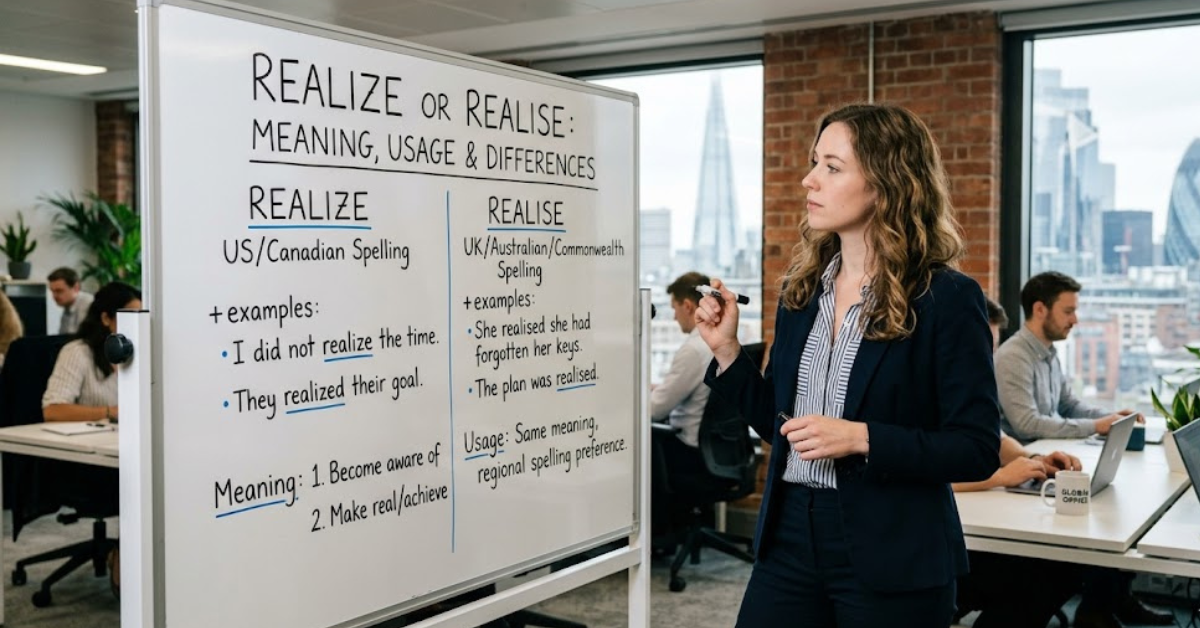
- I didn’t realize/realise how late it was.
- She finally realized/realised the truth.
- They realized/realised their dream of opening a café.
So whether you write realize or realise, the meaning stays exactly the same.
Realize vs Realise: The Key Difference
The only real difference between realize or realise is spelling style.
American English: “Realize”
- Used in the United States
- Follows the “-ize” ending pattern
- Examples: organize, recognize, realize
British English: “Realise”
- Used in the UK, Australia, New Zealand, and many Commonwealth countries
- Follows the “-ise” ending pattern
- Examples: organise, recognise, realise
Simple rule to remember:
- If your audience is US-based → use realize
- If your audience is UK/Commonwealth → use realise
Why Do Two Spellings Exist?
The English language has evolved differently across regions. Over time, both spelling systems became standardized.
Historical influence:
- The “-ize” ending comes from Greek and was later adopted in American English.
- British English preferred the French-influenced “-ise” spelling.
Neither is wrong—just regional preference.
When Should You Use Realize or Realise?
Choosing between realize or realise depends on consistency, not correctness.
Use “realize” if:
- You’re writing for American audiences
- You’re following AP Style or US academic writing
- Your website targets US SEO traffic
Use “realise” if:
- You’re writing for UK readers
- You’re following British academic or editorial standards
- Your brand uses UK English style
Common Mistakes with Realize or Realise
Even native speakers get confused sometimes. Here are a few pitfalls to avoid:
- Mixing both spellings in one document
- Switching styles halfway through an article
- Assuming one version is more “correct” than the other
- Using the wrong spelling for your target audience
Pro tip:
Pick one style guide and stick with it throughout your writing.
Quick Comparison Table
| Aspect | Realize | Realise |
| Region | US English | UK English |
| Style | -ize ending | -ise ending |
| Meaning | Same | Same |
| Correctness | Correct | Correct |
FAQs About Realize or Realise
1. Is “realize” or “realise” correct?
Both are correct. The difference depends on whether you use American or British English.
2. Which is more common?
“Realize” is more common globally due to American English influence, especially online content.
3. Can I use both in the same article?
It’s not recommended. Stick to one spelling style for consistency and professionalism.
4. Does spelling affect SEO ranking?
Not directly. However, using the spelling your audience searches for can improve relevance.
5. Is there a difference in meaning between realize and realise?
No. Both words mean the same thing; only the spelling changes.
Conclusion: Realize or Realise Made Simple
Understanding realize or realise is really about knowing your audience. The meaning stays the same, but the spelling changes based on whether you’re using American or British English.
If you’re writing for a global audience, choose one style and stay consistent throughout your content. That consistency improves readability, professionalism, and SEO performance.
At the end of the day, whether you write realize or realise, what matters most is clear communication—and now you’ve got that covered.