You’ve probably seen someone post “I’m locked in” or comment “We locked in” on social media and wondered what they actually meant. The phrase locked in meaning has become hugely popular online, especially among Gen Z users, gamers, athletes, students, and people discussing relationships.
However, the phrase does not carry a single meaning. Depending on the situation, it can show intense focus, emotional commitment, loyalty, or complete dedication to a person or goal. In one conversation, it may refer to productivity, while in another, it can describe a strong emotional connection.
This guide explains the phrase in simple language, shows how people use it today, and clears up confusion around its different meanings.
What Does Locked In Mean?
At its core, “locked in” means being fully committed, mentally focused, or strongly connected to something or someone.
People use the phrase when they want to show complete attention and dedication. As a result, it creates a feeling of certainty and determination.
For example:
- “I have exams next week, so I’m locked in.”
- “We are locked in for this project.”
- “He’s locked in with his training schedule.”
- “They’re locked in together.”
In each example, the speaker communicates focus and seriousness.
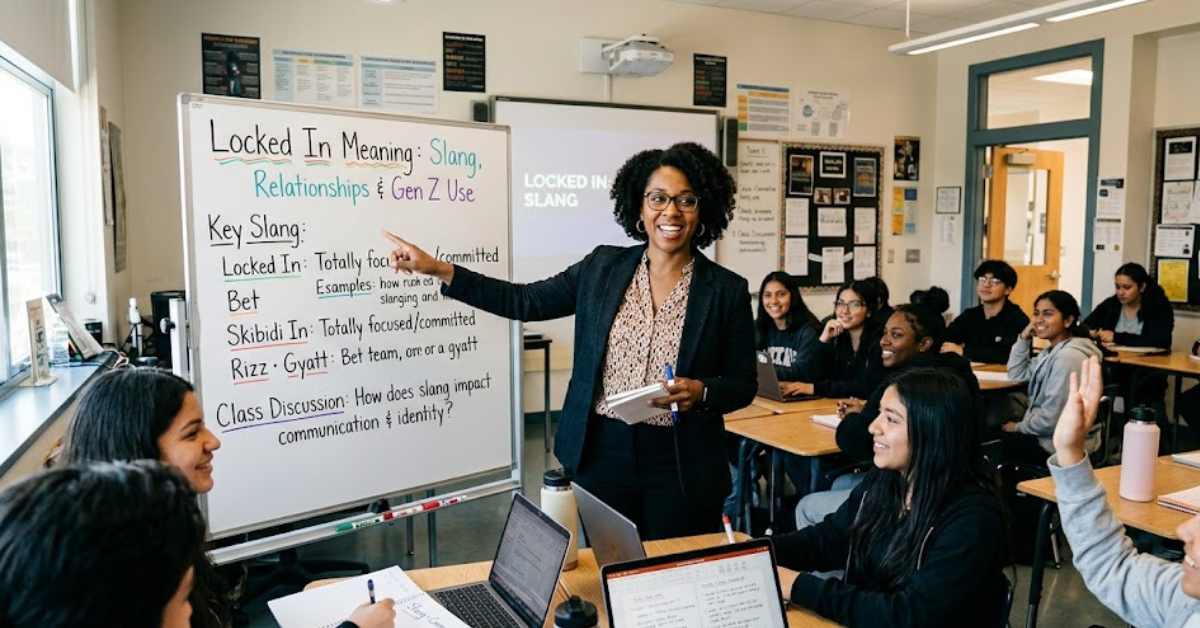
Locked In Meaning in Slang
In modern slang, locked in usually refers to focus and commitment.
People across social media and internet communities often use it to describe:
- Complete focus on a goal
- Taking something seriously
- Entering a high-performance mindset
- Becoming deeply committed
For instance, you might see comments such as:
- “Bro is locked in.”
- “Time to stay locked in.”
- “I’m locked in for the season.”
Unlike older expressions like “working hard,” this phrase sounds more energetic and current. Additionally, it carries a stronger feeling of determination.
Gen Z Locked In Meaning
Gen Z helped push this phrase into mainstream internet culture. Today, users frequently include it in videos, memes, and online discussions.
School and Studying
Students often say:
“Final exams start tomorrow. I’m locked in.”
In this situation, they mean they’re avoiding distractions and focusing entirely on studying.
Fitness and Self-Improvement
People working toward personal goals also use the phrase.
For example:
“No junk food, daily workouts, early mornings — I’m locked in.”
Here, the speaker emphasizes discipline and commitment.
Gaming
Gamers use the phrase when they need complete concentration.
Example:
“Don’t talk right now. I’m locked in.”
Sports
Similarly, athletes often use it before a competition.
Example:
“She’s locked in before the match.”
The phrase signals mental preparation and intense focus.
I Am Locked In Meaning and I’m Locked In Meaning
The phrases “I am locked in” and “I’m locked in” carry nearly identical meanings.
Both expressions suggest:
- Total concentration
- Strong commitment
- Serious intent
Examples include:
- “I’m locked in on my career.”
- “I am locked in this semester.”
In simple terms, the speaker says:
“I’m giving this my full effort and attention.”
Stay Locked In Meaning
People usually use stay locked in as a motivational phrase.
Instead of describing current focus, it encourages someone to maintain discipline and avoid distractions.
Examples include:
- “Keep going and stay locked in.”
- “Stay locked in and trust the process.”
- “Don’t get distracted.”
You often hear this phrase in:
- Sports communities
- Fitness groups
- Academic discussions
- Business environments
Locked In Meaning in Relationships
Relationships give the phrase a different meaning.
Rather than describing productivity, locked in often refers to emotional commitment and loyalty.
It can suggest:
- Serious intentions
- Long-term commitment
- Emotional connection
- Loyalty
- Exclusivity
For example:
“They’ve been together for years, and they’re locked in.”
Although the phrase doesn’t automatically mean marriage, it usually suggests a serious relationship.
You Are Locked In Meaning in Relationships
People often use this phrase casually or jokingly.
Generally, it means:
“You’re fully committed now.”
For example:
“You introduced her to your family? You’re locked in now.”
Sometimes people say it seriously. Other times, they use it humorously.
We Locked In Meaning in Relationships
The phrase we locked in often suggests that two people formed a strong connection.
For example:
- “After all we’ve been through, we locked in.”
- “We are locked in and building something together.”
Similarly, people may use it for close friendships or business partnerships.
Locked In Meaning in Friendship
In friendships, locked in focuses more on trust and loyalty.
Friends may use it to say:
- We support each other
- Our friendship is strong
- We trust one another
For example:
“We’ve known each other since childhood — we locked in.”
In other words, the phrase can mean:
“We’re close no matter what.”
We Locked In Meaning and We Are Locked In Meaning
These phrases usually emphasize teamwork and shared commitment.
People commonly use them for:
- Teams
- Friend groups
- Relationships
- Business partnerships
Examples:
- “We’re locked in for this competition.”
- “We are locked in for the future.”
As a result, the message stays simple: everyone commits to the same goal.
Fully Locked In Meaning
Adding fully increases the intensity of the phrase.
Instead of normal focus, it signals complete dedication.
Examples:
- “I’ve removed every distraction and fully locked in.”
- “He’s fully locked in on his business.”
Therefore, the phrase suggests maximum effort with no hesitation.
Are You Locked In Meaning
The question “Are you locked in?” usually asks:
“Are you serious?”
or
“Are you fully committed?”
Examples:
- “Are you locked in for the exam?”
- “Are you locked in for this season?”
- “Are you locked in with her?”
The exact meaning changes depending on the context.
Geeked vs Locked In Meaning
People often confuse geeked and locked in because both terms appear frequently online. However, they describe different feelings.
Geeked
- Excited
- Hyped
- Energetic
- Emotionally elevated
Locked In
- Focused
- Disciplined
- Serious
- Mentally concentrated
Examples:
“He’s geeked about the concert.”
“He’s locked in for the competition.”
Interestingly, someone can feel both emotions at the same time. A person may feel excited while staying fully focused.
Geeked or Locked In: Which One Fits Better?
If you’re choosing between these terms, think about the emotion you want to describe.
Use geeked if you feel:
- Excited
- Thrilled
- Highly energized
Meanwhile, use locked in if you feel:
- Focused
- Serious
- Dedicated
- Committed
Why Did the Phrase Become So Popular?
Several factors helped the phrase spread quickly:
- Social media trends
- Gaming communities
- Sports culture
- Self-improvement content
- Gen Z internet slang
Additionally, the phrase works in many situations. Because of that flexibility, people can use it almost anywhere commitment or focus exists.
FAQ
What is the locked in meaning in slang?
In slang, locked in usually means being highly focused, committed, or mentally dedicated to something.
What does “I’m locked in” mean?
It means you’re giving something your complete attention and taking it seriously.
What does “we locked in” mean?
It generally means two or more people share a strong connection or commit to the same goal.
What does “locked in” mean in relationships?
In relationships, it usually describes emotional commitment and loyalty.
Is “locked in” a Gen Z phrase?
Yes. Although the phrase existed earlier, Gen Z helped make it popular through social media and internet culture.
What does “stay locked in” mean?
It means continuing to focus and avoiding distractions.
Can “locked in” describe friendship?
Yes. People often use it to describe a strong friendship based on trust and loyalty.
Conclusion
Understanding locked in meaning becomes much easier when you look at the context. Sometimes people use it to describe focus and productivity. In other situations, they use it to express commitment in friendships and relationships.
As online language continues to evolve, phrases like this gain broader meanings and become part of everyday conversations. Moreover, modern slang keeps changing the way people communicate emotions, intentions, and personal connections.